By Kencho Tshering | Programme/Communications Officer
Promoting Young People’s Engagement in Local Governance Processes
When students and teacher coordinators from four Media and Democracy Clubs in Samtse, together with the Gups, Mangmi and Tshogpa of their gewogs, came together over six days this April, they were invited to sit with a question that is not often asked in their communities. Why do young people remain largely outside the local decisions that shape their everyday lives, and what would it take to bring them in? Through guided reflection and a series of participatory exercises grounded in Bhutan’s democratic and decentralisation framework, they began to answer it together.
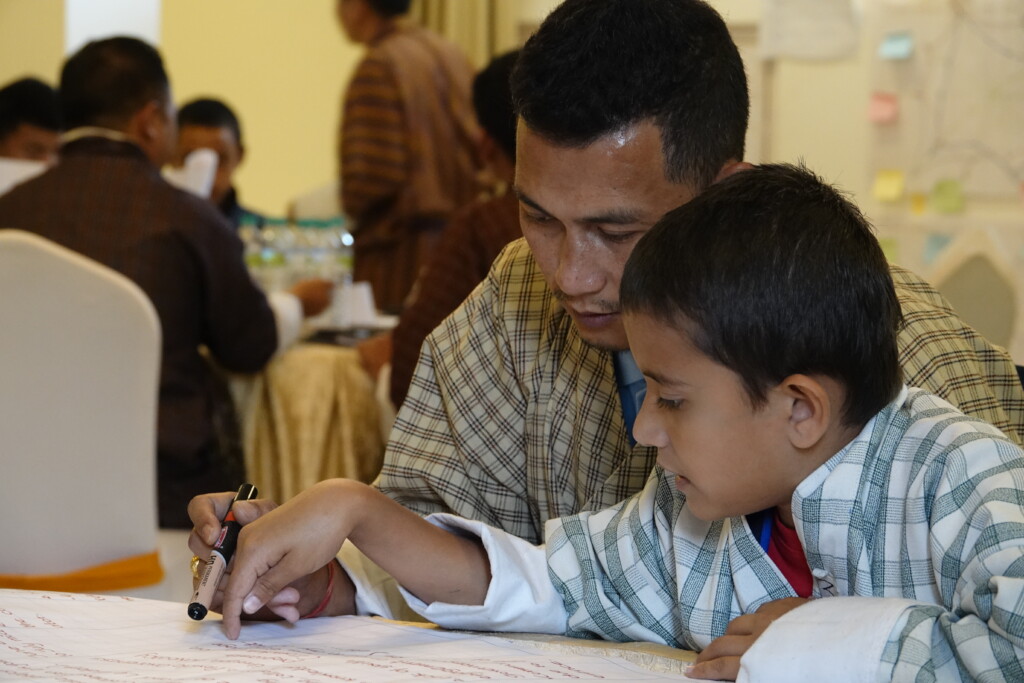
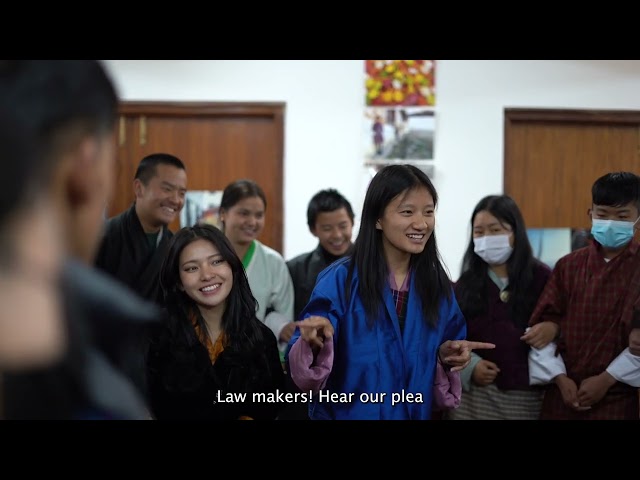
At the centre of the workshop was an exercise we call the Bza-zam Bridge. Working in mixed groups, students and Gewog leaders drew a bridge between young people and Local Government, naming what holds it up and what weakens it. What surfaced on both sides was reflective rather than defensive. By the close of the workshop, each school and gewog group had produced a Joint Action Plan grounded in the issues that matter most in their community. Samtse Primary School is addressing bullying inside the school. Sang-ngagchoeling Lower Secondary School is working on the safety of students living in rented rooms. Dorokha Central School is opening new platforms for student participation, and Peljorling Higher Secondary School is forming a youth committee at gewog level.
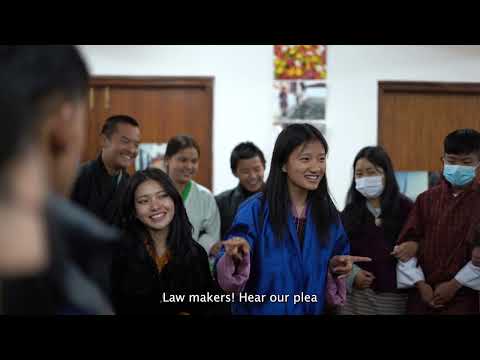
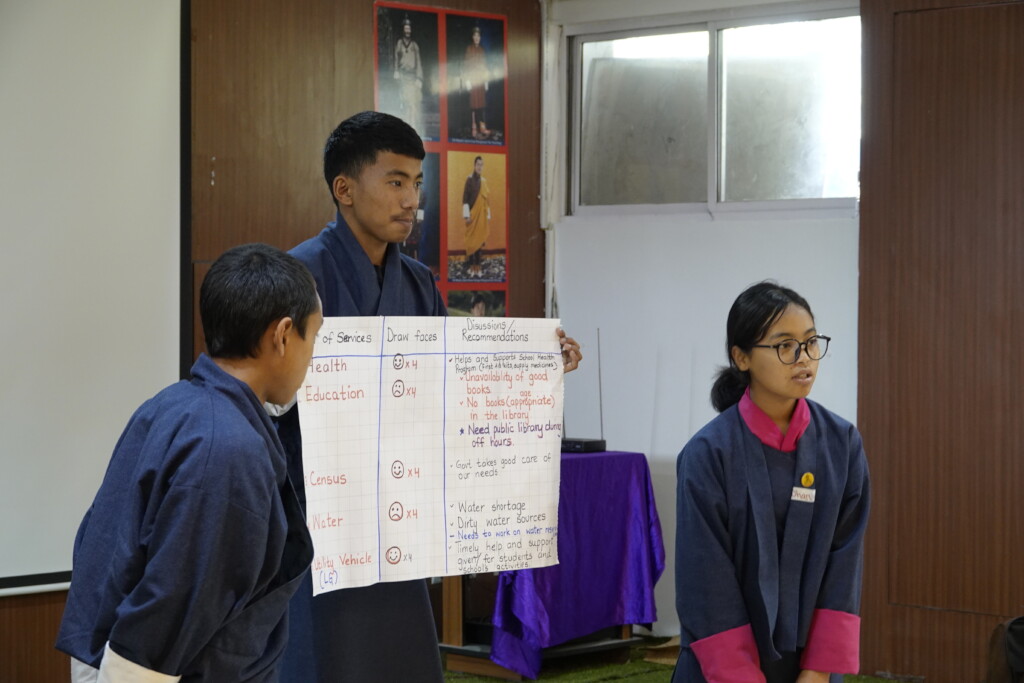
In May, the students presented those plans to the Dasho Dzongda, Dzongkhag officials, sector heads and their own Local Government leaders. They presented with a steadiness that surprised even those who had walked with them through the workshop. Peljorling proposed a three-step plan to form youth committees at gewog level. Dorokha asked that Zomdues be held on weekends and that invitations to students be put in writing. Sang-ngagchoeling, whose students had since the workshop already attended a Gewog Tshogde, proposed a multi-stakeholder Advisory Council with bi-annual meetings. Samtse Primary School committed to meet their Gup by the first week of June with an action plan on bullying.
In his keynote, the Dasho Dzongda told the room that "Youth National Service should not be just symbolic participation, but a civic participation in local governance," a framing that quietly disrupts the tokenism that students have lived with for years. The session closed with concrete commitments. The Sangngachoeling Gup committed to involving youth in every Gewog consultation and planning process going forward. The Tashichoeling Gewog Administrative Officer committed to dispatching official letters to schools inviting students to attend Gewog Tshogde meetings, and to sharing Gewog information through social media so that young people can follow what their leaders are deciding. The Election Officer raised the question of how school calendars and election cycles could be better aligned so that young people are not structurally excluded from democratic participation. At one point in the session, a student from Dorokha Central School spoke about an earlier Zomdue meeting she had attended, where she had hesitated to speak because of low awareness, lack of confidence, and fear of being mocked by the public. She added, simply, that this had begun to change.
Annual Exchange Between Civil Society Organisationsand Members of the Media and Democracy Clubs
During a virtual orientation in April, a student from Sherubtse College in eastern Bhutan raised a question that none of us had quite expected. A local shopkeeper near her campus was reportedly selling outdated goods, and she wanted to know whether reporting the issue as a citizen journalist might cost the shopkeeper her licence, and her livelihood. Should she respond first as a journalist, the student asked, or first as a citizen? It was a small, careful question, but it carried within it the heart of what this work is about.
Over April and May 2026, three hundred students from ten Media and Democracy Clubs across three regional clusters of Bhutan, namely Trongsa, Trashigang, and Samtse, came together in two phases of virtual exchange. In the first phase, students explored the principles of citizen journalism and ethical storytelling, and were asked to describe their communities in a single word. The words they offered were both proud and concerned. Peaceful, united, beautiful, and yet marked by issues that none of them felt able to ignore.
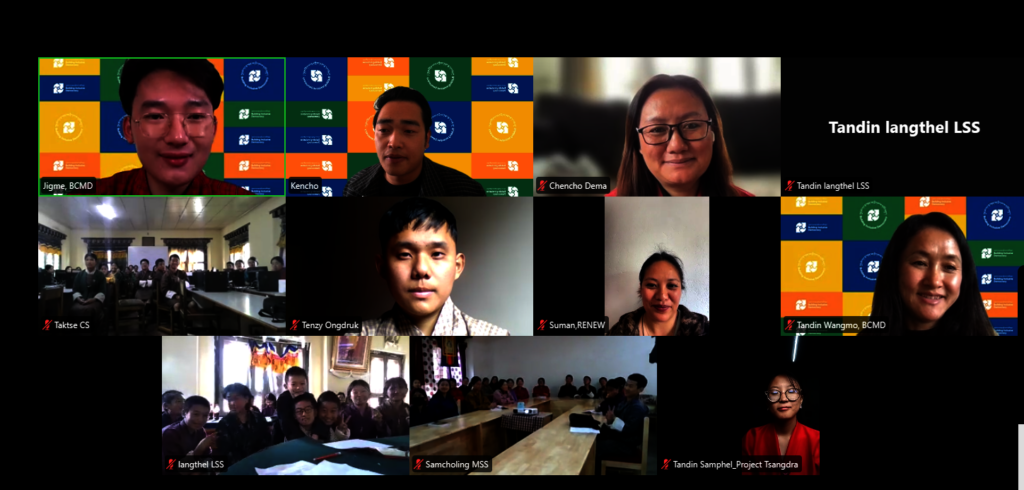
The second phase brought students together with ten civil society organisations and three senior journalist mentors. Each school presented community stories it had begun to investigate. Taktse Central School documented seasonal water scarcity in their village, where women and girls carry water in jerry-cans through the winter months. Sakteng Lower Secondary School, from one of Bhutan’s most remote communities, told the story of children whose nomadic parents are away in highland pastures for six to eight months of the year, leaving them with grandparents or alone. Dorokha Central School raised the absence of public toilets in community gathering spaces. Peljorling Higher Secondary School reported on crop damage by elephants and wild boars affecting farmers near forest edges. Civil society practitioners and journalists offered mentorship grounded in their own field experience, helping students refine the stories, verify their sources, and consider how a single well-told story can open a wider conversation.
Across the two phases, students identified issues spanning five thematic areas: infrastructure and safety, public health and water, environment and waste, education and child wellbeing, and human-wildlife conflict. They also came to recognise, with the help of their mentors, that responsible storytelling requires patience, verification, and the careful weighing of public interest against possible harm. The strongest stories from each school will be brought to a national exchange in Thimphu later in the year, where students will present their refined work to a wider audience.
For the student from Sherubtse College, the question she raised in April has not gone away. She and her peers are continuing to think through what their responsibility looks like when their own community comes into the frame.
Project reports on GlobalGiving are posted directly to globalgiving.org by Project Leaders as they are completed, generally every 3-4 months. To protect the integrity of these documents, GlobalGiving does not alter them; therefore you may find some language or formatting issues.
If you donate to this project or have donated to this project, you can receive an email when this project posts a report. You can also subscribe for reports without donating.



Support this important cause by creating a personalized fundraising page.
Start a Fundraiser